
By David Hernandez | DTLA Loft Specialist | Last Updated: February 16, 2026
The Quick Answer
When searching for real estate in Downtown Los Angeles, the term "loft" is often used loosely. A "True" Industrial Loft is a converted historic warehouse space characterized by raw materials, open floor plans without defined bedrooms, and high ceilings. A Modern "Soft-Loft" is typically newer construction (post-2000s) that mimics the aesthetic with concrete ceilings but offers traditional bedroom walls, modern amenities, and quieter environments. Understanding this difference is the first step to finding the right home in DTLA.
DTLA’s real estate market is unique because it is defined by adaptive reuse—turning old commercial buildings into residential spaces.
However, many buyers I tour with get confused when a listing says "loft," but they arrive to find a standard one-bedroom apartment that happens to have exposed ductwork.
As a specialist in both the historic buildings of the Arts District and the glittering towers of South Park, I help clients navigate the reality of these two very different lifestyles. Here is the definitive guide to comparing them.
1. Defining the "True" Industrial Loft
These are the spaces that made DTLA famous. They are located primarily in the Historic Core, Arts District, and parts of the Fashion District.
The History: These buildings were originally factories, warehouses, or office buildings built between the early 1900s and the 1950s. They were converted under LA’s Adaptive Reuse Ordinance.
The Aesthetic: Raw, authentic, and sometimes gritty. Expect exposed brick walls, heavy timber beams or mushroom concrete columns, polished concrete floors, and massive industrial windows.
The Layout: Usually one large, open room. There are rarely walls defining a bedroom. You define your space using furniture, screens, or custom-built dividers.
Notable Examples: The Rowan, The Higgins Building, Pan American Lofts, Barker Block.
2. Defining the Modern "Soft-Loft" Condo
These properties dominate neighborhoods like South Park and near L.A. Live. They offer the "vibe" of a loft with the comforts of a traditional home.
The History: Mostly purpose-built residential towers constructed from the mid-2000s to today.
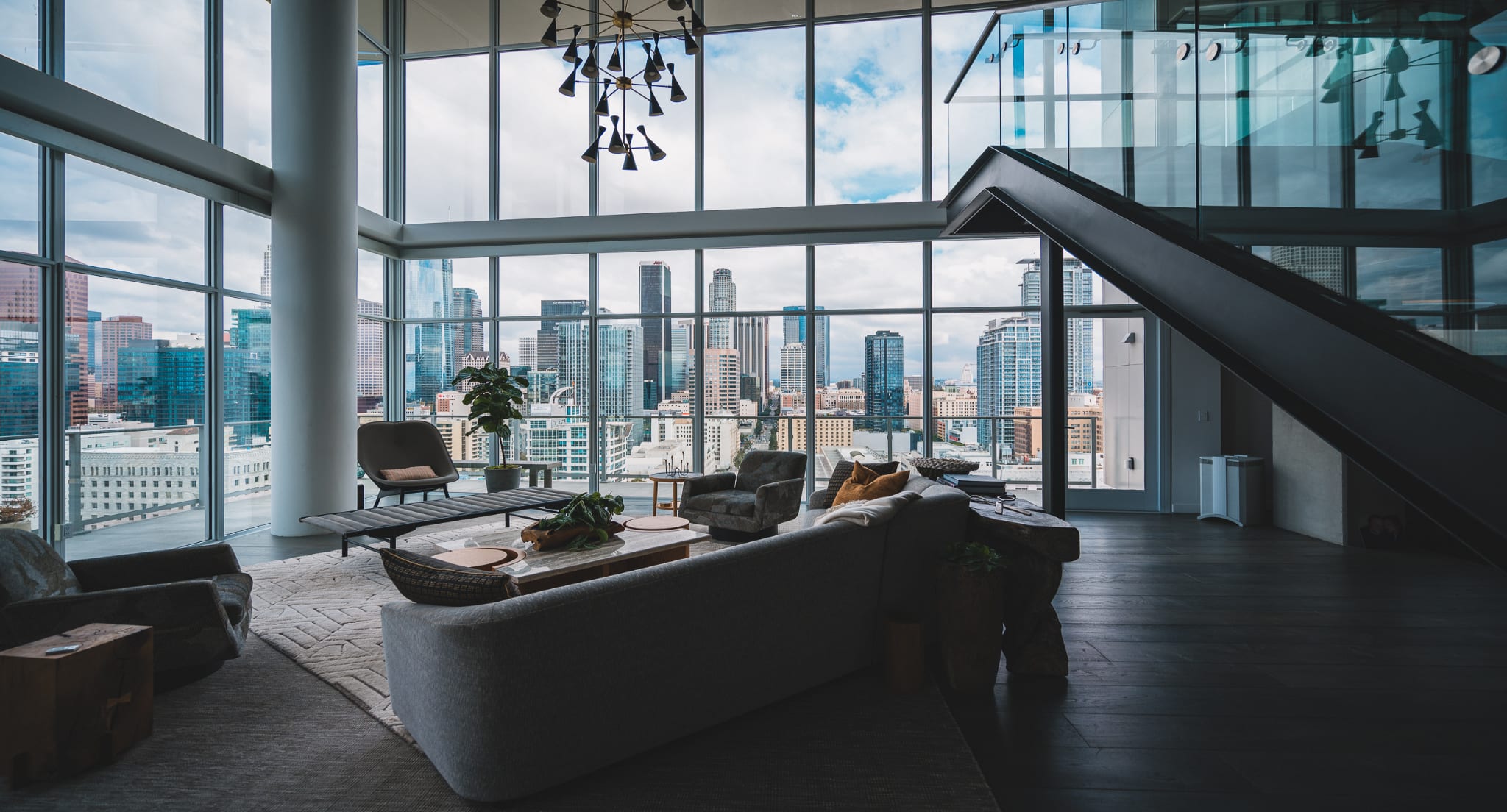
The Aesthetic: Polished and "cleaner." They often feature high exposed concrete ceilings and floor-to-ceiling glass windows, but lack historic brick or timber. They feel engineered rather than adapted.
The Layout: They have defined bedrooms with real doors and closets. They function like traditional apartments but with cooler aesthetics.
Notable Examples: Metropolis, Ten50, Evo, Luma.
Comparison: Industrial vs. Modern at a Glance
| Feature | True Industrial Loft | Modern "Soft-Loft" Condo |
| Walls/Bedrooms | Wide open space; rarely has bedroom walls. | Defined bedrooms with doors. |
| Key Materials | Historic brick, timber beams, raw concrete. | Drywall, glass, polished concrete. |
| Noise Level | Often noisier (thinner walls, street noise). | Usually well-insulated and quieter. |
| Amenities | Usually minimal (maybe a rooftop deck). | Resort-style (pools, gyms, concierges). |
| HOA Fees | Varies, but sometimes lower due to fewer amenities. | Typically higher to support luxury amenities. |
| Best Vibe For... | Creatives wanting a blank canvas. | Professionals wanting convenience. |
David’s Expert Take: Which Lifestyle Fits You?
In my experience representing buyers in Downtown LA, the choice rarely comes down to price—it comes down to lifestyle tolerance.
Choose a True Industrial Loft if: You are a creative professional, artist, or someone who craves authenticity. You want your home to be a conversation piece. You are willing to tolerate some city noise and drafty windows in exchange for 14-foot ceilings and 100-year-old brickwork that you simply cannot replicate in new construction. You want to be in the thick of the Arts District culture.
Choose a Modern Soft-Loft if: You love the look of downtown, but you need sleep. If you work long hours and need a quiet bedroom, a dedicated parking space, and an on-site gym, the historic buildings will frustrate you. Modern towers in South Park offer a "lock-and-leave" convenience that appeals to busy professionals.
Frequently Asked Questions about DTLA Lofts
Q: Are true industrial lofts in DTLA noisy?
A: Generally, yes. Historic buildings often have single-pane windows and less insulation between floors. You will likely hear street noise, sirens, and sometimes your neighbors. Modern soft-lofts are usually built to higher soundproofing standards.
Q: Do modern soft-lofts hold their value as well as historic lofts?
A: Both have strong markets, but historic lofts are a finite resource—they aren't building any more 1920s warehouses. This scarcity can sometimes lead to better long-term value retention, whereas modern condos face competition from brand-new towers being built nearby.
Q: Can I build walls in an open industrial loft?
A: Usually, yes, but it requires HOA approval and city permits. Many of my clients use temporary pressurized walls or large wardrobe units to create separation without permanent construction.
Are you looking to navigate the DTLA loft market?
Whether you want raw history in the Arts District or modern luxury in South Park, you need an agent who knows the inventory building by building.
Contact David Hernandez today to schedule a consultation and tour the properties that match your lifestyle.